
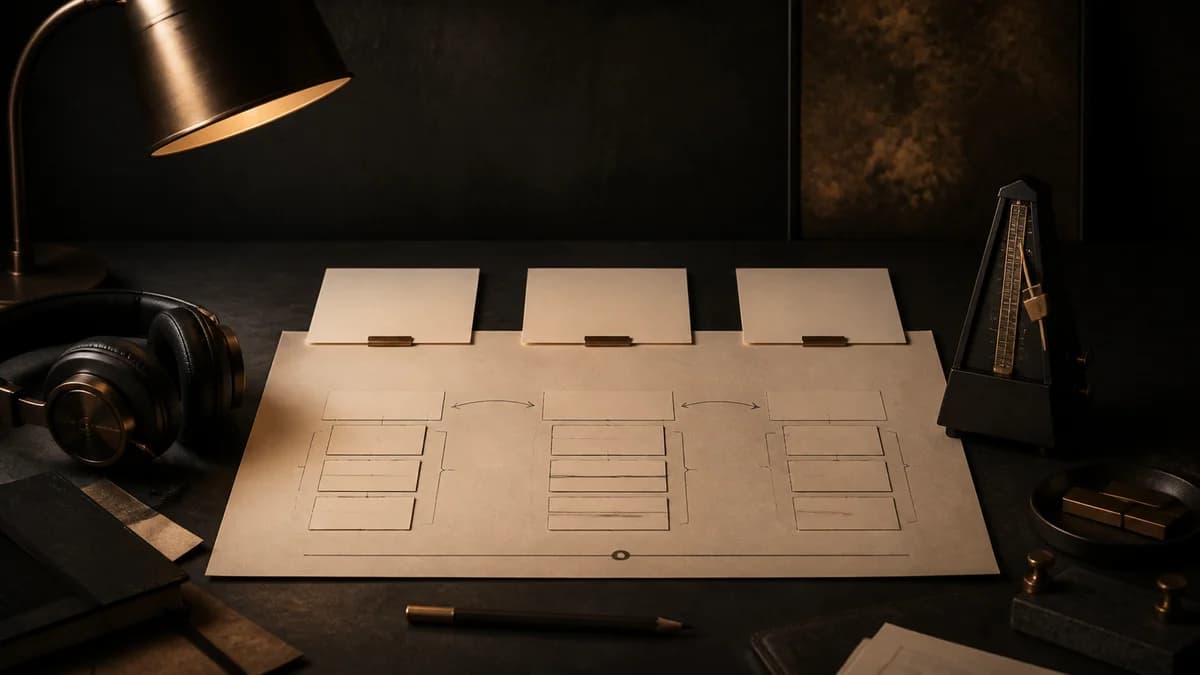
A useful song structure gives every section a job. The verse creates curiosity, the chorus makes the central promise, and the bridge changes the view before the final return. That is enough to start organising an AI music project without treating a familiar pattern like a rulebook.
When a generated song feels flat, the problem is often not the genre or the voice. It is that every section is asking for the same kind of attention. A clear structure gives the listener somewhere to go — and gives you better decisions to make before you generate.
What song structure is really doing
Structure is the order and purpose of the sections in a song. It is not a guarantee that a render will work, and it is not a formula that replaces taste. It is a map for contrast, expectation and release.
Each section makes a promise
A verse says there is more to discover. A chorus says this is the idea to remember. A bridge says the song can look at that idea from somewhere new. If two sections make the same promise, one of them may need a different job.
Contrast creates movement
Contrast does not have to mean a dramatic key change. It can be a shorter lyric line, a wider vocal, a thinner arrangement, a new drum pattern or simply a different point of view. Small changes are often easier to control than a complete reinvention.
Verse, chorus and bridge: the core jobs
The verse: detail and direction
Use the verse to show the situation, introduce images and move the thought forward. Two verses can share a melody while changing the detail. If each verse says exactly the same thing, the song has less reason to continue.
The chorus: the memorable centre
The chorus carries the line or feeling you want the listener to carry away. It usually benefits from simpler language, a clear emotional lift and a shape that can return without becoming tiring. Give it a distinct job before asking a generator to make it bigger.
The bridge: a turn, not a spare verse
A bridge earns its place by changing something: the argument, the image, the rhythm, the vocal perspective or the level of energy. It can be quiet. The important thing is that the final chorus feels different because the bridge happened.
How energy moves through a song
Think of energy as attention, not just loudness. A sparse verse can hold attention with a strong image. A full chorus can still feel static if nothing in the lyric or melody changes.
Build towards a reason
A pre-chorus, repeated phrase or rising arrangement can create anticipation. The build works when the listener understands what it is preparing them for.
Let the release land
The chorus should answer, intensify or reframe what the verse started. Leave enough contrast around it for the return to feel earned, rather than making every section full from the first bar.
Use the bridge to turn the path
The bridge is a useful place to introduce a new fact or emotional decision. In a planning brief, write down what changes there in one sentence. “The character stops waiting and chooses” is more useful than “make the bridge different”.
A practical structure checklist
Before generating, read the structure as a small story. You should be able to explain what each section is doing without reaching for production jargon.
Start with tension
What question, feeling or situation opens the song? If the verse has no tension, the chorus has nothing to answer.
Make the chorus earn its repeat
Name the one idea the chorus owns. Check that the verses add detail rather than repeating the headline.
Give the bridge a clear turn
Write the change you want before you write the instruction. The production can support the turn; it cannot invent the reason for it.
Three starting blueprints
A Blueprint is a starting shape, not a finished song. Choose one that suits the job of the lyric, then adjust the number of sections, their length and the energy between them.
Pop: familiar lift and return
A verse, pre-chorus, chorus, second verse, pre-chorus, chorus, bridge and final chorus gives a clear rise-and-return shape. The Pop Standard Blueprint is a useful reference when the hook needs room to arrive without being rushed.
Ballad: space for detail
A verse, chorus, second verse, chorus, bridge and final chorus leaves more air around the lyric. The Ballad Blueprint can help when the emotional movement should come from the words and the vocal rather than constant arrangement changes.
Rock: contrast through sections
A quieter verse against a more physical chorus can create momentum without adding more words. The Rock / Metal Blueprint is a useful starting point when the arrangement needs a strong difference between restraint and impact.
Connect structure to the wider workflow
The public Blueprint library gives you more starting shapes, while the genre guides help you choose a sound world that supports the structure. Use both as references, then write the actual decisions into your brief.
When you are ready to keep the brief, lyrics, review notes and export together, Kordra Music provides the web workspace for planning and handing off AI-assisted projects for Suno or Udio.
The practical takeaway
Start with the job of each section: verse discovers, chorus remembers, bridge turns. Then decide where attention should build, release and change. A useful structure does not remove creative freedom — it gives every experiment somewhere to land.