Keep the purpose clear.
A product should make a specific part of your day easier. New features need to earn their place in that workflow.
The company behind the tools
Independent by design
Kordra began with a practical problem: helping people shape a song before generating it. That became Kordra Music.
Writing songs on a Mac and catching ideas away from it called for different tools. Studio and Capture grew around those moments, each with its own purpose and its own way of handling the work.
Today, Kordra is an independent software company building focused tools for creative professionals. Music is where we started. The wider interest is the work around an idea: how it is kept, developed, organised and passed on.
Care you can see
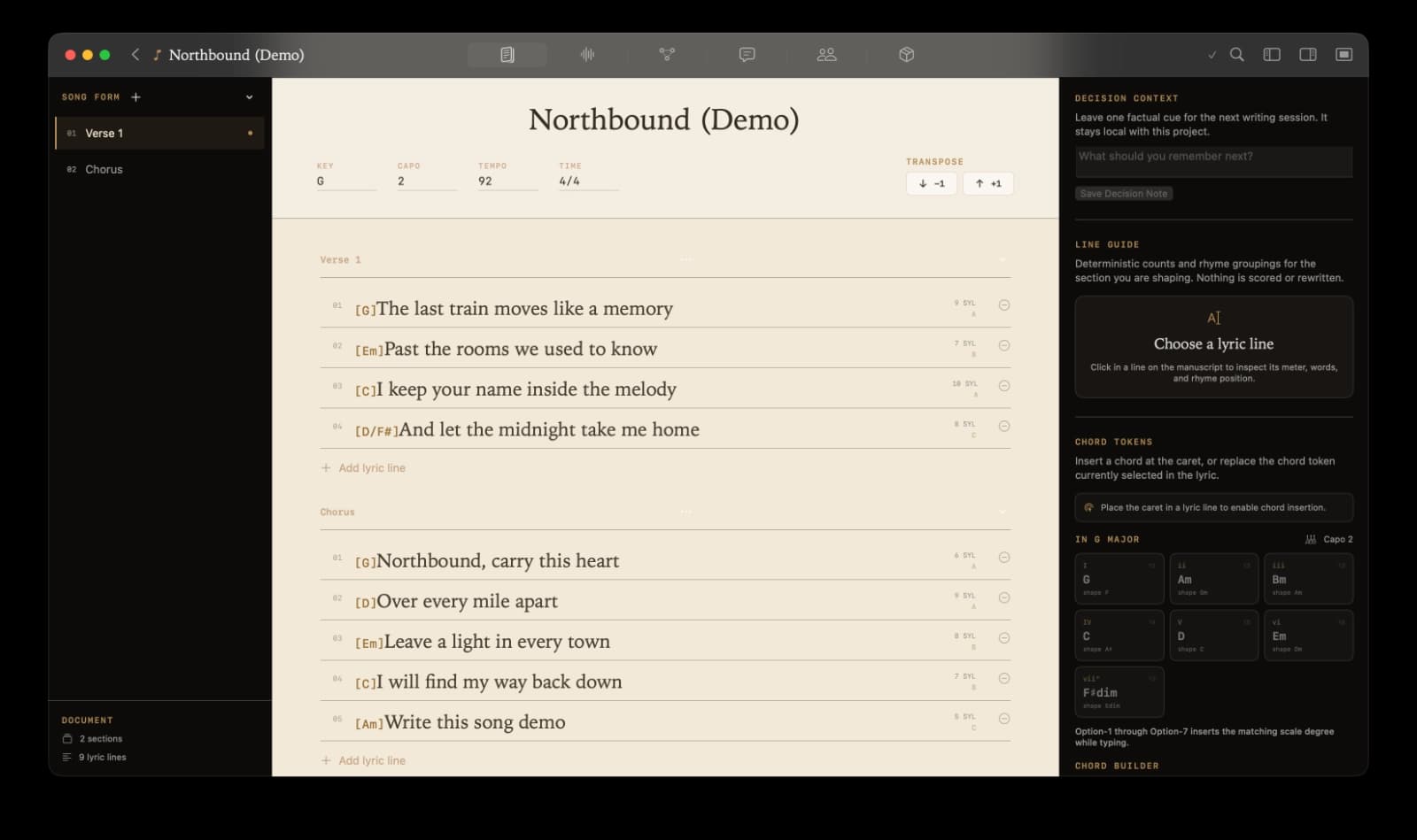
A lyric beside its chords. A recording beside the draft. A clear choice about what goes into an export. These are the small decisions that make a tool useful day after day.
We choose the platform around the work. A native writing room can stay on your Mac. A web workspace can support an AI-assisted planning process. They share a design standard without needing to become the same product.
How we decide what belongs
Useful software gives the work more room, without asking for more of your attention.
A product should make a specific part of your day easier. New features need to earn their place in that workflow.
Your words, recordings and decisions deserve continuity. Keep the context close and make it possible to return to the work.
Useful exports and explicit handoffs let a project move beyond the app. Choose the next person, session or tool yourself.